
H-GAC Regional Bus Transit Study
The H-GAC Regional Bus Transit Study is exploring opportunities to create interlocal bus connections across the region. Your feedback will help us better understand how people travel today, where they need to go, and the challenges they face along the way. We are seeking input from both current transit users and people who may benefit from stronger regional bus connections in the future.
Regional bus service could help connect communities to jobs, schools, healthcare, shopping, and other major destinations across the H-GAC region. This study explores what regional bus routes could look like in our region, with input from residents, stakeholders, and local partners across the region.
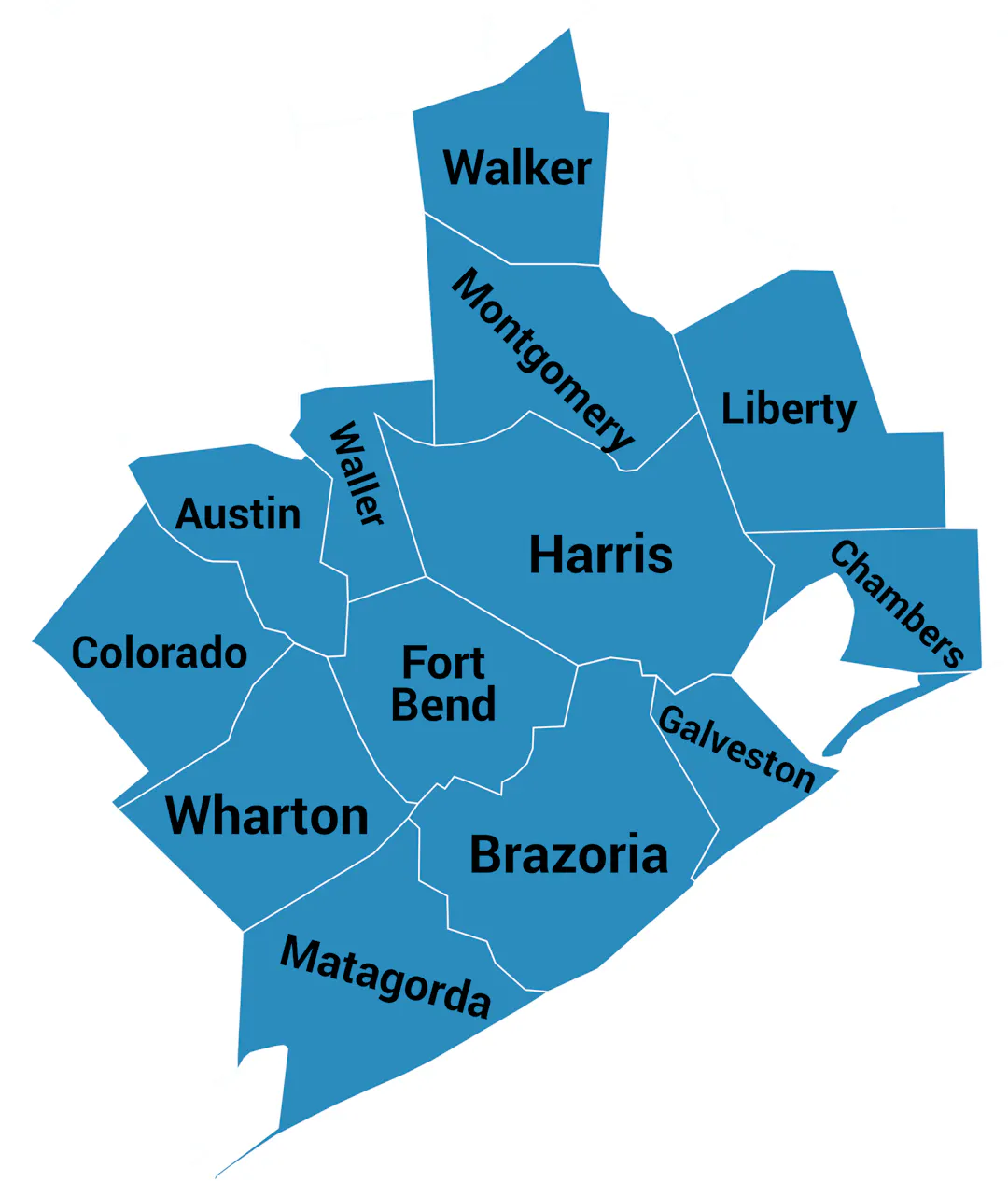
The Regional Bus Study covers all thirteen counties of the H-GAC service area.
The study includes three rounds of public engagement aligned with key project milestones.
- Round 1 focuses on setting the context and collecting baseline travel behavior information.
- Round 2 will share findings on existing conditions, travel patterns, and regional mobility needs, and gather feedback on service gaps, challenges, and preliminary ideas.
- Round 3 will present draft regional bus recommendations and seek input on proposed routes, priorities, and implementation considerations before the study is finalized.
Information about public engagement is coming soon! In the meantime, please participate by completing the survey and exploring our interactive map below!
-
Frequently Asked Questions (FAQ)
Share Frequently Asked Questions (FAQ) on Facebook Share Frequently Asked Questions (FAQ) on X (formerly Twitter) Share Frequently Asked Questions (FAQ) on Linkedin Email Frequently Asked Questions (FAQ) linkWhat is the H-GAC Regional Bus Transit Study?
The study is evaluating how bus services could better connect communities across the region. For example, regional bus routes could connect outlying communities to each other as well as the urban core, providing access to jobs, education, healthcare and other services.
What is regional bus service?
Regional bus service connects destinations across counties and communities. It is different from local bus service, which mainly serves trips within a city or community. Regional bus routes generally travel longer distances and have fewer stops than local bus routes.
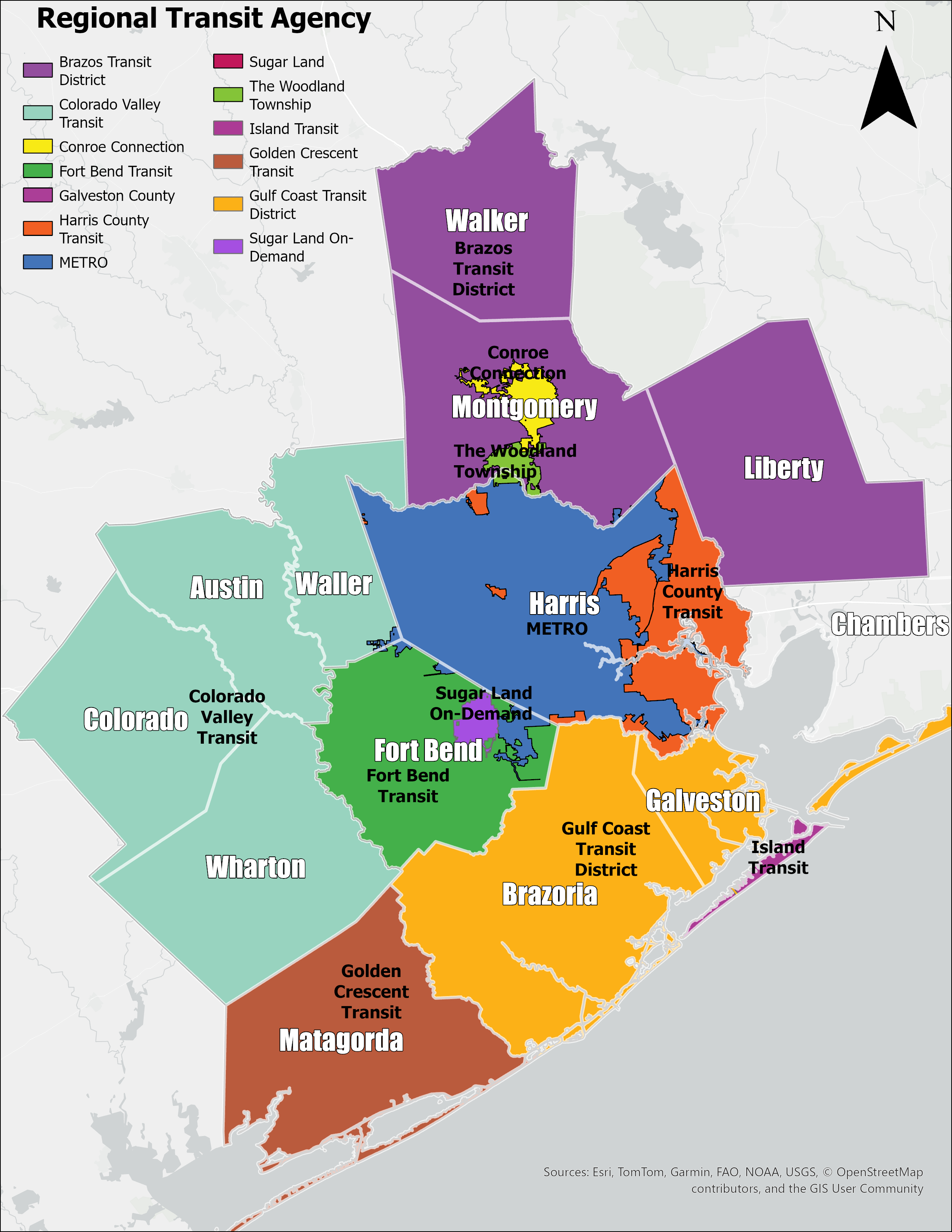
Regional bus has the potential to provide connectivity across current transit provider boundaries, which are shown in the map below. Right now these transit providers generally operate bus services entirely within their geographic service areas, with little ability for riders to transfer between providers.
What is an example of a regional bus route?
The Splash, a bus route connecting Galveston and Texas City, allows transit users to seamlessly bridge the gap between the mainland and Galveston Island. This regional bus can be used by riders to connect to local bus services provided by two separate agencies - the City of Galveston's Island Transit and service provided by the Gulf Coast Transit District in Texas City - to reach their final destinations.
The purpose of the Regional Bus study is to evaluate if a network of routes such as The Splash can be implemented to better connect our region and the services offered by its various transit providers.
Is this a final route plan?
No. This is a planning study. Public input will help inform future recommendations.
Who will operate this service?
This is to be determined. The Regional Bus Study will consider implementation scenarios including potential operators and funding sources.
How can I participate?
You can attend a public meeting, take the online survey, and use the online engagement tools on this page.
How will my input be used?
Public input will help the study team understand current travel patterns, regional mobility needs, and barriers to travel. That feedback will be used to inform future planning recommendations.
FAQ last revised 4/23/2026
-

Phone 832-681-2545 Email thomas.gray@h-gac.com
