
FAQs
- Walking
- Bicycling
- Rolling using wheelchairs or other mobility devices
- Walking or bicycling to access transit
- Using sidewalks, bicycle facilities, shared-use paths, trails, and other facilities that support active travel
- Create safer places for individuals to walk, bicycle, and roll
- Provide more transportation choices
- Improve connections between neighborhoods and important destinations
- Increase access to jobs, schools, healthcare, transit, parks, and other community destinations
- Support healthier lifestyles
- Provide alternatives to driving for some trips
- Support regional efforts to improve air quality
- Strengthen connections between communities
- Support economic vitality and community reliance
- Residents
- Individuals who walk, bicycle, or roll
- People who use mobility devices
- Transit riders
- Commuters
- Students and families
- Older adults
- Individuals with disabilities
- Businesses and employers
- Local governments
- Transportation agencies
- Community and neighborhood organizations
- Advocacy organizations
- Identify locations where individuals experience safety or accessibility challenges
- Understand barriers that may not be reflected in available data
- Identify important destinations and connections
- Understand community priorities
- Identify opportunities for improvements
- Refine strategies and recommendations
What is the Regional Active Transportation Plan?
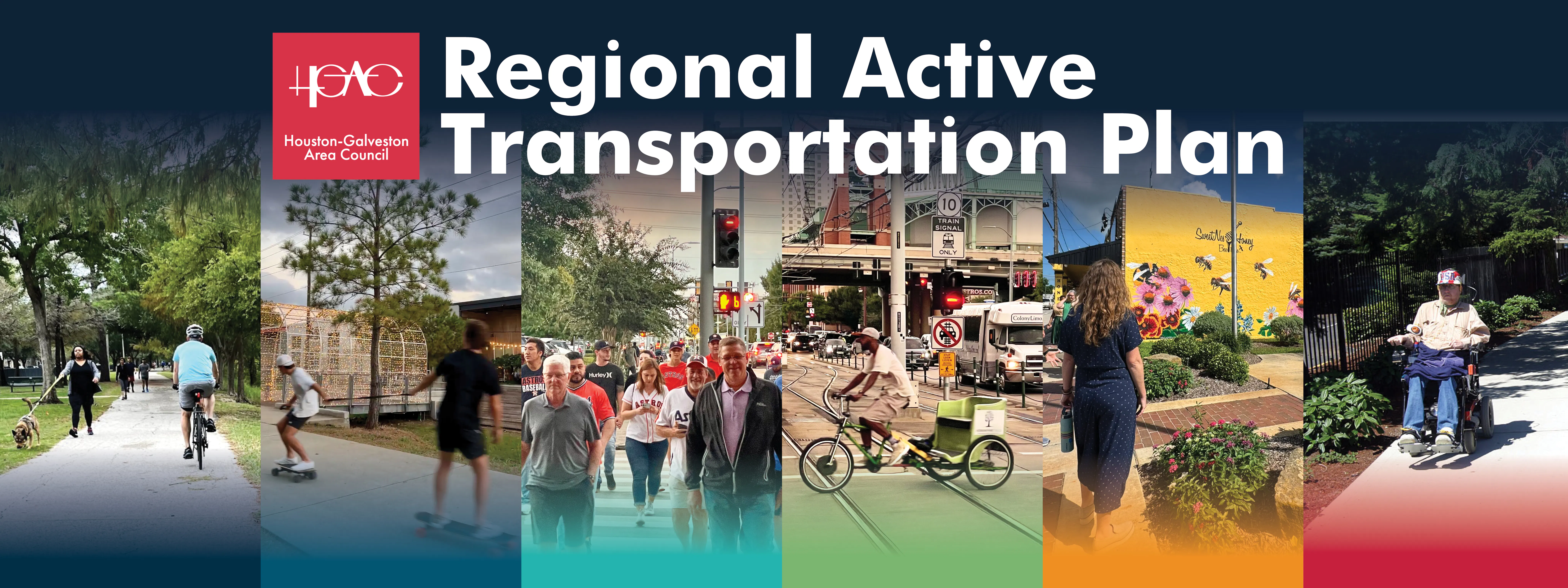
The Regional Active Transportation Plan is H-GAC's roadmap for creating a safer, more connected, and more accessible transportation network for people who walk, bike, roll, or access transit throughout the eight-county Metropolitan Planning Area. The plan will identify priorities, strategies, and recommendations that help connect people to schools, jobs, parks, healthcare, transit, and other destinations.
How is the Regional Active Transportation Plan different from the 2050 Regional Transportation Plan (RTP)?
The 2050 Regional Transportation Plan (RTP) establishes the long-term vision for transportation across the region and considers all modes of travel. The Regional Active Transportation Plan complements the RTP by focusing specifically on active transportation, including walking, bicycling, rolling, trail connections, and access to transit. While the RTP defines where the region wants to go, the Regional Active Transportation Plan takes a deeper look at how active transportation can help achieve that vision.
What communities are included in the Regional Active Transportation Plan?
The Regional Active Transportation Plan covers H-GAC's entire eight-county Metropolitan Planning Area, which includes Brazoria, Chambers, Fort Bend, Galveston, Harris, Liberty, Montgomery, and Waller counties. The plan will consider the unique transportation needs and opportunities of urban, suburban, rural, and coastal communities throughout the region.
Why is H-GAC developing an Active Transportation Plan?
As the region continues to grow, communities are looking for safe and convenient ways to walk, bike, roll, and access transit. The Regional Active Transportation Plan will help identify opportunities to improve safety, strengthen connections between neighborhoods and destinations, expand transportation choices, and support healthier, more vibrant communities. The plan will also help communities prepare for future growth while improving mobility for people of all ages and abilities.
How can I provide input on the Regional Active Transportation Plan?
Public input is a critical part of the planning process. H-GAC will offer multiple opportunities for residents to participate, including public meetings, community events, virtual engagement opportunities, surveys, interactive maps, and stakeholder discussions. Feedback collected throughout the process will help shape the plan's vision, goals, priorities, and recommendations. H-GAC is committed to providing accessible and multilingual engagement opportunities to help ensure everyone has a chance to participate. You can provide feedback on the plan webpage here.
What is Active Transportation?
Active transportation generally refers to getting from one place to another using human-powered or other active forms of travel.
This can include:
Active transportation is about more than recreation. People use these modes every day to get to work, school, healthcare, shopping, transit, parks, and other destinations.
For some people, walking, bicycling, or rolling is their primary way of getting around. For others, it may be one part of a trip that also includes driving or public transportation.
The RATP will consider the different ways individuals travel and the connections they need to reach important destinations safely and conveniently.
Why Does Active Transportation Matter?
As the Texas Gulf Coast region continues to grow, communities need transportation options that work for people of all ages and abilities.
Improving active transportation can help communities:
A well-connected active transportation network can make it easier for individuals to get where they need to go. This includes trips made entirely on foot, by bicycle, or using a mobility device, as well as trips that connect to another form of transportation.
Who can participate in the Regional Active Transportation Plan?
We want to hear from individuals throughout the region, including:
Anyone who lives, works, attends school, travels or spends time in the eight-county Metropolitan Planning Area can provide input. You do not have to regularly walk, bike, or use transit to participate. H-GAC wants to hear from people about what works well today, where improvements are needed and what would make it easier or safer to get where they need to go.
What kind of feedback is H-GAC looking for?
H-GAC wants to understand where people experience challenges and opportunities related to walking, bicycling, rolling, and access to transit. This may include locations where people feel unsafe, gaps in sidewalks or trails, difficult crossings, barriers to accessing transit, connections between neighborhoods and destinations, or opportunities to improve the regional network.
How will my feedback be used?
Public input is one part of the information H-GAC will consider as the plan is developed.
Community feedback will help the project team:
As the project moves forward, H-GAC will share what we heard from the community. We will also explain how public input was considered in developing the plan.
Will my suggestion become a project?
The Regional Active Transportation Plan will identify potential projects, strategies and priorities for consideration across the region. The plan itself does not guarantee that an individual suggestion or project will be funded or constructed.
Implementation may involve H-GAC, local governments, transportation agencies, or other partners, depending on the project.
Does H-GAC build sidewalks, trails and bike lanes?
H-GAC works with local governments, transportation agencies and other partners on regional transportation planning. Individual transportation projects may be planned, funded or implemented by local governments, TxDOT, transit agencies, or other partners.
The Regional Active Transportation Plan will help identify regional needs, opportunities, and priorities that can inform future planning and investment.
Why should I participate if I don't walk or bike?
Active transportation affects more than people who regularly walk or bike. Walking, bicycling, rolling, and access to transit are connected to the larger transportation network and can help people reach jobs, schools, health care, shopping, parks, and other destinations.
The Regional Active Transportation Plan also considers how active transportation connects with driving and other modes of transportation. H-GAC wants to hear from anyone who has ideas or concerns about transportation in their community.
What if I have a concern about a specific sidewalk, trail, road or intersection?
H-GAC welcomes information about locations where people experience transportation challenges. The Regional Active Transportation Plan is a regional planning effort, so individual project concerns may also need to be addressed by the local government, transportation agency, or other agency responsible for that facility.
How can I participate if I cannot attend an event?
There will be multiple ways to participate in the Regional Active Transportation Plan planning process. If you are unable to attend an event, please visit engage.h-gac.com/2050-ratp to take the online survey, see project updates, and review plan materials.
Do I have to live in the county where an event is being held to participate?
No. Anyone interested in the future of active transportation in the H-GAC region is welcome to participate. If you cannot attend an event in your county, you can participate through other available engagement opportunities.
What happens after the public engagement period?
H-GAC will review and analyze feedback collected throughout the engagement process and use it to inform the development of the Regional Active Transportation Plan. You can follow the draft plan, provide comments and learn how public input was recorded on our website: engage.h-gac.com/2050-ratp.